No inbound ports, VPNs, or static IPs
- The device opens a persistent reverse SSH tunnel
- No firewall changes on your side
- Runs behind any NAT or proxy
One architecture for encoders, cameras, and IP devices. Whether you build the hardware or just field it.
One control plane for fleets stuck on networks you don't control — cellular, CGNAT, firewalled enterprise LANs, or environments with no connectivity at all.
Two control paths, and they interoperate. Both ride the same secure reverse connectivity layer, so you get simultaneous access without standing up infrastructure twice.
Same secure reverse connectivity layer for both. No infrastructure built twice.
Every device talks out; nothing dials in. One reverse SSH tunnel per device, multiplexed across as many local services as you need.
Operators hit the device exactly as the manufacturer built it. Vendor UI, native APIs, debug tools, logs — nothing stripped, and nothing exposed on the public internet.
Every device — any vendor, any firmware — shows up behind one schema and one API. Operators work standardized fields, consistent actions, and unified telemetry. Not vendor-specific implementations.
Underlying componentsEvery device setting maps to a canonical key. Adapters take care of type conversion, conditional fields, dependency chains, and which changes force a reboot.
net.lan.ip LAN IPv4 address net.wifi.ssid Wi-Fi network name stream.bitrate Encoder output bitrate Operators never touch a vendor-specific API.
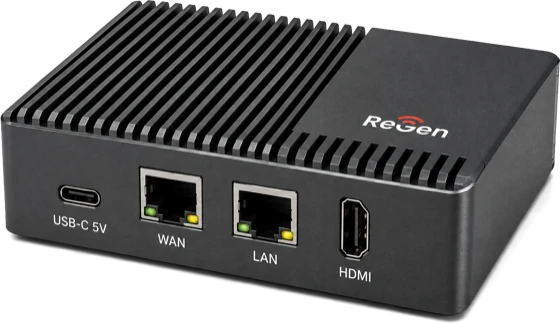
When direct integration isn't possible, a ReGen Bridge sits in as a local intermediary. It connects securely out to RemoteGenius servers and talks to nearby devices over LAN. That covers closed systems, legacy hardware, and devices with no remote capability of their own.
For mixed-vendor fleets, the same route powers universal device adapters for legacy IP devices — production-grade adapters generated from brief remote access.
Same APIs whatever the mode. A Cloud Gateway abstraction lets clusters run connected, disconnected, or in hybrid failover.
The same platform runs a two-device pilot and a thousand-node rollout. Logical isolation is enforced at every layer.
Small customers get zero-setup infrastructure. Enterprises get full control and isolation.
Security isn't bolted on top. It is the transport. Every tunnel, every API call, every device — authenticated and auditable.
Adoption doesn't mean redesigning firmware. Integration can deepen over time — from zero-code bridge access up to full native API integration.
No firmware redesign to adopt. Integration can deepen later.
See how production teams run it in pro AV and broadcast signal chains, where remote-access failures are not an option.
In production the two paths don't get equal use. Automation runs the day-to-day. Native access stays in reserve for the long tail of edge cases.
Automation for scale — NOCs, dashboards, and scripted operations
Reserved for debugging, vendor tooling, and new firmware
One connectivity model, two control paths, and deployment that scales from a single tenant to a global fleet.